


Easter traditions in the Silesian Beskids are among those that have survived centuries in almost unchanged form – here the liturgy intertwines with the rhythm of awakening nature, and the smell of freshly baked leavened bread accompanies morning services before the sun even reaches the bottom of the valley. If you are looking for Easter that has taste, smell and a specific ritual – the Beskids are worth visiting at this time of year.
This region has long attracted those who want to experience Easter not as a backdrop for photographs, but as a living ceremony, deeply rooted in local history and multi-denominational identity. And that identity is genuinely complex.
The Silesian Beskids – a historical outline
The Silesian Beskids is an area that for centuries lay at the crossroads of influences – Silesian, Moravian, Polish and Hungarian. Wisła, Ustroń, Szczyrk and Brenna are towns whose history dates back to the Middle Ages, and their cultural character was shaped by successive waves of settlers, shifting borders and the influence of the Church in its various denominations.
It was here, in the 16th century, that Lutheranism took deeper root than in almost any other part of present-day Poland. The Reformation, brought by Czech and Silesian merchants and nobility, changed not only the way services were held, but also the rhythm of the liturgical year, which to this day sets Wisła apart from the rest of the country.
When the Counter-Reformation reached Cieszyn Silesia in the 17th century, Evangelicals faced a choice: renounce their faith or seek shelter. Many chose the latter. They gathered in secret in forests, ravines, and according to local accounts – also in Beskid caves, far from imperial officials and Catholic missionaries. Services were held at night, by candlelight, in whispers. The Malinowska Cave remains in local memory as one of the places where these forest gatherings took place, though the boundary between history and legend is fluid here and nobody seems particularly eager to draw it.
Those decades of persecution left a lasting mark – Evangelical identity in this region is not a calm or straightforward inheritance, but something that ancestors had to fight for literally. Perhaps that is why Good Friday in Wisła still carries something more than liturgical solemnity. In the Silesian Beskids, history is not merely a backdrop – it literally organises the calendar of holidays.
A religious mosaic
Wisła is one of the few towns in Poland where two strong Christian traditions – Catholic and Evangelical-Augsburg – have coexisted for generations, not merely tolerating each other but actively shaping local culture. The effect is particularly noticeable during Easter.
For Lutherans, Good Friday is the most important day. Shops close early, streets fall quiet, and families gather for services. Anyone who visits the centre of Wisła on that day will notice that time genuinely slows down – less traffic, less noise, a distinct shift in atmosphere.
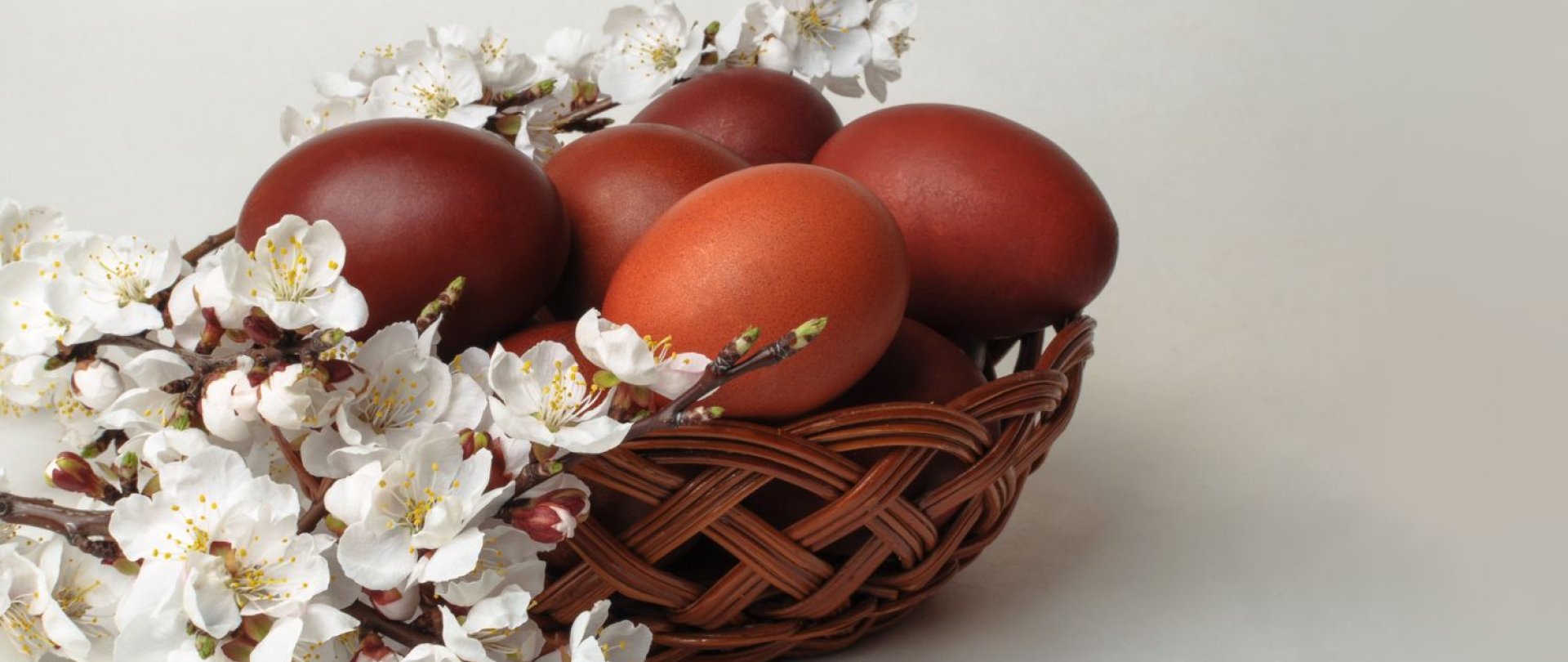
Holy Saturday belongs primarily to the Catholic tradition. Families make their way to churches carrying baskets filled with bread, decorated eggs, ham and a regional baked good called szołdra. Alongside these – horseradish, a symbol of bitterness and at the same time of good health for the year ahead.
Driving along the roads leading to Wisła or Ustroń, it is hard to miss the signs bearing the words "100% Chrystus" – "100% Christ". These are not the mark of any political organisation – they are an expression of faith from Pentecostal and charismatic communities, which have held a strong position in this region for decades. The Christian Centre "Życie i Moc" ("Life and Power") in Wisła is one of the largest such congregations in Poland. The signs have become part of the Beskid landscape, representing a third pillar of local spirituality alongside Catholicism and Lutheranism.
Easter traditions in the Silesian Beskids
Before sitting down to Easter breakfast, the Silesian Beskids has several rituals to offer – rituals that have long disappeared in many other parts of the world.
On Good Friday before sunrise, an old tradition required washing oneself in a nearby stream. It was believed that water on this day heals skin conditions, brings beauty and strengthens the body for the whole year. Beskid streams in March or April are ice-cold – and that very harshness was part of the ritual. In Malinka and Nowa Osada there are still families who maintain this custom, treating it seriously rather than as a folkloric display.
Easter palms in the Silesian Beskids look different from those made in Vilnius or the Kurpie region. They are made from willow and hazel branches, tied with a red ribbon – the colour is said to protect against the evil eye. An old custom of swallowing the blessed catkins, known locally as bazie or kocianki, was believed to guarantee freedom from sore throats for the whole year ahead. Some residents still practise this, taking the catkins directly from their blessed palm after Sunday services.
Easter Monday in this region has its own name: szmirus or śmiergust. Groups of young men, sometimes dressed as figures from local folklore, go from house to house – and not only douse girls with water, but also spray them with perfume. The more fragrances a girl receives, the greater her luck in love is supposed to be in the coming year. It is a loud, joyful finale to the Easter cycle, which shows that the Silesian Beskids knows how to have fun with a sense of humour.
Szołdra – the Easter bake of Cieszyn Silesia
If you were to ask a native of Wisła or Ustroń what absolutely cannot be missing from the Easter table, the answer is one: szołdra. It is a traditional leavened bake characteristic of Cieszyn Silesia, shaped into an elongated roll or a traditional loaf form with a meat filling – most commonly sausage, ham and bacon. The name is no coincidence: szołdra means ham in the Silesian dialect.
The dough is savoury, richly aromatic from the smoked meats, and after baking in a bread oven it develops a dark, firm crust. That dark colour gave rise to a second local name – Murzin. Differences between households can be subtle: different proportions of meats, different degrees of smoking, different thickness of dough. Every family has its own recipe and guards it carefully.
Szołdra is sliced and served at the Easter breakfast, often alongside hard-boiled eggs and horseradish. It finds its place both in Catholic baskets blessed on Holy Saturday and on the Evangelical Easter table – it is one of those bakes that reconciles two denominational traditions at a single table. In 2006, szołdra was entered on the register of traditional products of the Silesian voivodeship.
Easter in the Silesian Beskids – where to stay
For those who want to experience these traditions up close, it is worth choosing accommodation outside the very centre of Wisła. Hotel Vestina in the Malinka district sits along road 942, in the Wisła Malinka valley, around 2 km from the Adam Małysz Ski Jump. From the hotel windows you can see the Cieńków slopes, and reaching the trails takes just a few minutes on foot.
The property is a three-star hotel, suited to families and couples, with a wellness area that opened in December 2025, comprising saunas, jacuzzis and a steam bath. Its distinguishing feature is a brine graduation tower with rattan loungers – recommended particularly for allergy sufferers and children, whose respiratory tracts benefit from the specific microclimate of the brine. The restaurant serves regional cuisine, including dishes characteristic of the Silesian Beskids.
During the Easter period the hotel organises children's entertainment and craft workshops over long weekends. The drive from Katowice takes around 80 minutes, and noticeably less from Bielsko-Biała.
Summary
Easter in the Silesian Beskids is not one ritual but several overlapping orders of experience – the Evangelical quiet of Good Friday, the Catholic baskets of Holy Saturday, ice-cold streams before dawn, palms tied with red ribbon and szołdra freshly pulled from the oven. All of this takes place in a valley where the mountains still look wintry and the first leaves on the willows are just beginning to emerge from their buds.
If you want to see Easter that is neither a denominational monolith nor a product tailored for tourists, the Silesian Beskids is one of the few places in Poland where tradition is still authentic and legible.
FAQ
Is Good Friday a public holiday in Poland? No, Good Friday is not a statutory day off in Poland. In practice, in Wisła and the surrounding area many local businesses and shops close early or do not open at all, out of respect for the Evangelical tradition of the day. Visitors should plan their shopping a day in advance.
How does Evangelical Easter differ from Catholic Easter in Wisła? For Lutherans, the most important day is Good Friday – observed with solemnity and contemplation. Easter Sunday is celebrated festively, but does not dominate the calendar in the same way as in the Catholic tradition. Catholics place particular emphasis on Holy Saturday (the blessing of food baskets) and Easter Sunday (the solemn Resurrection Mass).
What is szmirus and where can you see it? Szmirus (śmiergust) is the local name for Śmigus-dyngus, the traditional Easter Monday water-sprinkling custom. In Wisła and surrounding villages it is practised in the form of dousing girls with water and spraying them with perfume. The best places to look for this custom are Wisła itself and smaller localities such as Istebna or Koniaków, where Easter folklore is still very much alive.
Where can you try traditional szołdra? Szołdra is baked primarily by local bakeries and home cooks. It is worth looking for it at Easter fairs and markets held in Wisła and Ustroń in the days leading up to the holidays. Some agritourism guesthouses serve it as part of the Easter breakfast.
Is the Silesian Beskids a good destination for Easter with children? Yes – the trails are generally accessible to families from early spring, and local traditions such as decorating Easter eggs, baking szołdra or taking part in holiday fairs engage children without any special preparation. Hotels in the Wisła area typically offer family packages with organised activities.